

Speaking Basque in the Basque Country.
Interview with M.
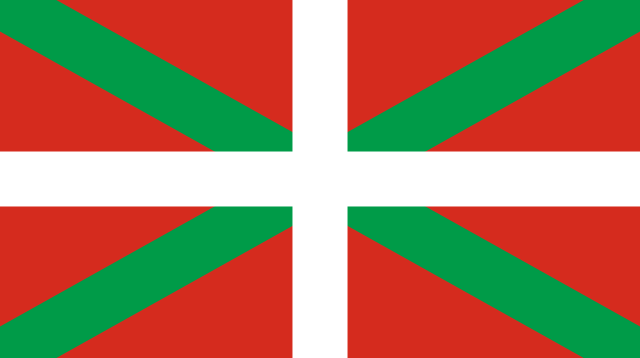
As part of our brand new series of interviews with minoritised language speakers, the LISTEN (L) project spoke to M., a Basque speaker living in the Basque Country.
L: Tell us something about yourself, especially the language(s) you speak and the country where you are living. What is your mother tongue? Which other languages do you speak? Where and how did you learn those languages?
M: I live in the Basque Country. Both my parents are monolingual Spanish speakers, but they chose model D (Basque immersion) for me and my sister when we entered the public education system (age 3). In the Basque Autonomous Community, parents can choose between models A, B or D for their children1.
I am a fluent speaker of Basque, Spanish and English, and I have learned some French (A2, many years ago), German (A2+) and Norwegian (less than A1).
I learned Spanish at home, with family, friends and context, as it is the majority language of my context.
I learned Basque through the education system, I passed the C1 exam in secondary education, and I am currently doing a PhD in Basque.
English is a school subject in elementary education, and I studied in a trilingual education model during Secondary Education. In the trilingual model, besides the English class, we had other school subjects such as Science, Arts, and Society, Culture and Religions (or Religion) in English, in 3rd grade of secondary school we had Geography. My parents signed me up for an English academy at the age of 16-17. I started going to extracurricular English classes in order to prepare for the First (FCE). I kept going to the academy for 2 more years to get the CAE, which I did and passed during my first year of university. At university, I studied Education to become an English teacher in Primary Education. I did a MA in the USA and I passed the CPE in 2018.
L: How and where is your language used? Is it widely used or not? Is it normal to hear your language everywhere or not? Do you use it in all of your life activities or not?
M: Although Basque is a minority language in the Basque Autonomous Community, schooling data are positive as most children are scholarized in the Basque immersion model. Nevertheless, Basque use is very limited and usually related to the fields of school or family, but rarely related to “cool” things, and informal situations (at least in my context which is very Spanish-dominant).
It is not very usual to hear Basque where I live, I get happy every time I hear it on the street, and the most typical context in which I hear it is usually a parent-child conversation.
I rarely use it in my life activities. I try to do so, and I have signed up for different activities available in my municipality, but most people who sign up for these activities are people who are learning Basque, or who just want to pass an exam. Most people my age, or people around me who learned Basque through the education system do not seem to be concerned with its use.
Since I attended my first TELP (Taller d’Espai Lingüistic Personal) talk I have been trying to be assertive and speak the first word in Basque. Most people around me who know Basque, do not try to answer back in Basque, even if they could (I’m not sure about their current proficiency though, after so many years without using it). Since I began to start every conversation in Basque, I have realized that I can use it much more than I thought, even if the other person answers back in Spanish, most people understand Basque, even for a short conversation.
A very positive experience was the Euskaraldia2. During 11 days in 2018, most of my friends “accepted” me speaking Basque, and some tried to speak in Basque too.
L: Can you describe some of the challenges that prevent you and other people from using your language on some occasions? Have you ever felt any pressure not to use your language in some contexts? Have you ever been explicitly forbidden to use your language?
M: For me, it was a challenge to propose a change to my Spanish relationships to speak Basque, I was afraid of people asking why, and maybe even being “delegitimized” as I did not learn Basque at home, and some could argue Basque is not my mother tongue or my first language, and maybe they wouldn’t understand the reason why it is important to me to speak Basque. To be honest, I myself don’t know why it is important to me to use Basque, but it is.
I have felt pressure not to use Basque when I know a non-Basque speaking person entering a conversation I was having in Basque. It is unlikely that a conversation happens in Basque, but now that I have created more relationships in Basque, and that I live with my non-Basque-speaking partner, I have felt the need to switch to Spanish when he is around, even if he has never complained about it nor asked to switch. That is something I am working on. I have asked him several times to start learning Basque, and he has a positive attitude towards it and a willingness to learn it. At least a passive or receptive skill would be convenient for me to be able to keep a Basque dominant environment at home now or in the future if we have kids.
I do not recall being explicitly forbidden to use Basque. Although I feel upset when in a bar they do not want to understand “kafesnea” (coffee with milk), they are not forbidding Basque, but not understanding that shows a clear attitude against the language. It’s a context-specific conversation, a word which can be easily understood and which any bartender in the BAC (or even the whole Basque Country) should be able to understand.
L: Can you give an example of when speaking your language represented a problem or a challenge for you? What happened? How did you feel?
M: I can’t think of any situation in which speaking Basque represented a problem, but it has been a challenge for me to speak Basque in some contexts and areas which are Spanish dominant.
For example, as I have learned Basque at school, some topics or conversations that are not related to school have been quite challenging for me in terms of vocabulary (for example food vocabulary, vegetables, fruits…, conversations with doctors and nurses, bank or administration related conversations…). But I have to admit that most of those challenges were just in my head, most people I have encountered have not criticized or corrected my Basque, some have even reported the same “anxiety” or “fear” as me, which has helped to release language-related tension as we were not going to judge each other, just use the language we wanted to use without being judged. And it is not a problem to code-switch eventually if needed for the sake of communication.
L: Do you think that there could be anything that could be done? By whom?
M: I think there is a lot to be done by Basque speakers, non-Basque speakers, the Basque Government, adults, teachers, children… society at all levels in general. This doesn’t mean that the situation hasn’t improved, it has, by a lot. Schooling data are constantly increasing in favour of the Basque language, there are research projects and speaker activation protocols…
Things that could be done, in my opinion, should start with language ideologies. There are still a lot of untrue beliefs regarding the mother tongue, many new speakers are stigmatized or feel stigmatized (even if they are not), and these and all speakers need to be activated, empowered, and non-speakers need to be attracted to learn the language, and people who are already attracted need more facilities to learn the language.
We should also avoid correcting minority language speakers, corrections can be done with the purpose of learning, but not at the expense of the joy of speaking a language or interrupting a conversation.
Code-switching should be legitimized as a way of bilingual speaking or even a way to incorporate the minority language into conversations of the majority language.
MORE TELP TALKS! I feel the TELP talk is an empowering tool to be assertive in the use of your language.
Click here to hear the sound of Basque!
Notes:
- For an explanation of the Basque educational system, you can refer to the Mercator report “The Basque language in education in Spain”, page 12.
Euskaraldia has been an initiative by the Basque Government to promote the use of Basque in everyday life. There have been 2 “seasons”; one in 2018 and another one in 2020, this year will be the third one. Every person who wants to participate takes a role “Ahobizi” or “Belarriprest”. Ahobizis take the compromise to speak Basque as much as they can with everyone and everywhere. Belarriprests are willing to listen to any conversation in Basque but do not compromise to speak in Basque if they feel they can’t or don’t want to. Aho means “mouth” and bizi “alive”. Belarri is “ear” and prest “ready”. The Euskaraldia lasts about 2 weeks. Since the second edition, not only individual people but also different businesses and enterprises can sign up as arigune, namely spaces were Basque is used.